
Grand County Court Records After Arrest
A Grand County jail arrest can create several records, but they do not all live in one place. The Sheriff's Office and jail handle the arrest, booking, custody, and local detention side. The 14th Judicial District Attorney reviews the case and decides what formal charges to file. Once a case is filed, the Colorado Judicial Branch maintains the docket and court-file documents. That is why Grand County court records after arrest can differ from the booking allegation or the information a family member hears during the first hours after custody.
The Grand County Judicial Center is the local court point for county and district cases. The county is part of the 14th Judicial District with Moffat and Routt Counties, and the district attorney's office prosecutes felonies, misdemeanors, and most traffic offenses under Colorado law. Booking details and custody status are better handled through Grand County jail inmate records, while booking photo questions belong with the Grand County jail mugshots records process. Court records after a jail arrest focus on the filed case.
Arrest to Grand County Court Records
The arrest-to-court path has distinct stages. A law-enforcement agency arrests or transports the person, the jail books the person if local custody applies, a judge may address bond or release conditions, and the prosecutor reviews the file. The 14th Judicial District Attorney states that the office handles criminal and traffic violations in Grand, Routt, and Moffat Counties and is the primary prosecution entity from arrest through resolution. After filing, the court record becomes the official place to check charges and hearing activity.
- Arrest or warrant custody starts with a law-enforcement agency.
- Local jail custody routes to the Grand County Sheriff's Office Detention Facility when the person is held in county jail.
- Bond or release conditions may be addressed by a judge, including weekend bond hearing procedures.
- The 14th Judicial District Attorney reviews the case and files formal charges when prosecution goes forward.
- The Colorado Judicial Branch docket and record request tools show court activity after filing.
Find Court Records After a Grand County Arrest
The Colorado Judicial Branch docket search is the main public search point for hearing lists and case-number clues. Use Grand County, the 14th Judicial District, or the Grand County Judicial Center when narrowing the search. The docket page states that at least one filter in addition to date is required. A docket result is not the same as a full court file, but it can help identify the case number, court type, parties, and hearing schedule.
| Docket Field | Type | Grand County Use |
|---|---|---|
| Judicial District | Dropdown | Select 14th Judicial District for Grand County cases. |
| County | Dropdown | Choose Grand County when known. |
| Courthouse | Dropdown | Use Grand County Judicial Center if listed. |
| Date Range | Dropdown or date | Required with at least one other search filter. |
| Party Name | Text | Search by individual first and last name. |
| Case Number | Year, class, sequence | Use the case-number components when available. |
Request Grand County Court Records
Use the Colorado Judicial Branch record/document request form when a docket listing is not enough. The form can request criminal documents such as a complaint or information, a disposition or sentence order, a protection order, a ticket, and a Register of Action. A Register of Action, often called an ROA, is a court record summary that may include charges, sentences, and minute orders. The request form says responses are generally provided within three business days unless extenuating circumstances exist.
Grand County Combined Courts is located at 307 Moffat Avenue, P.O. Box 192, Hot Sulphur Springs, CO 80451. The clerk's office phone is 970-725-3357 ext. 7, and the court email listed in the research is grandclerk@judicial.state.co.us. Courthouse hours are Monday through Friday, 8:00 a.m. to 5:00 p.m., with the office closed from noon to 1:00 p.m. Court filings by email are not filed until accepted by the Clerk's Office and uploaded into the case-management system.
| Document Type | What It Usually Tells You |
|---|---|
| Complaint / Information | The formal charges filed by the prosecutor after review. |
| Disposition / Sentence Order | The result or sentence entered by the court. |
| Protection Order | Restrictions or no-contact terms issued in the case. |
| Ticket | Traffic or summons information tied to the case. |
| Register of Action / ROA | A case summary with entries, charges, orders, and hearing activity. |
Charges in Grand County Court Records
Filed court charges are not always the same as arrest language. An arrest record may reflect what the arresting officer had probable cause to act on. The court record reflects what the prosecutor filed, what the court accepted, and how the case changed through motions, pleas, dismissals, amendments, or sentencing. That distinction matters in Grand County court records after a jail arrest because a jail booking can be quick, while prosecutor review and court filing can take more time.
| Status | Meaning in Court Records |
|---|---|
| Filed | The prosecutor filed a charge in court. |
| Amended | The charge was changed after filing. |
| Dismissed | The charge was ended without a conviction on that count. |
| Deferred | The case may be resolved under conditions before final disposition. |
| Convicted / sentenced | The court entered a conviction and sentence or final judgment. |
Charge vs. conviction: A charge is an allegation filed in court. A conviction is a court result after plea, trial, or other legal resolution.
Bond Records After Jail Arrest
Bond information can appear in court events, warrants, bond hearing schedules, jail notes, or verbal instructions from the jail or court. Grand County's jail page publishes a $10 bond fee and a $30 booking fee, but it does not publish a complete bond-payment procedure, accepted payment types, or an online bond vendor. The Colorado Judicial Branch explains bond types such as cash bond, surety bond, property bond, professional surety bond, and personal recognizance bond. Judges set bond type and amount based on the case and court rules.
| Bond Type | Plain Meaning |
|---|---|
| Cash bond | The full bond amount is paid in cash. |
| Surety bond | A surety or bondsman backs the bond. |
| Property bond | Colorado real property may be used if the court accepts it. |
| Personal recognizance | Release is based on a written promise and conditions. |
| No-bond hold | Release by bond is not currently authorized. |
Always check for holds before assuming bond will release a person. Another warrant, probation or parole hold, federal hold, immigration detainer, or another county's case can block release even when a Grand County bond exists.
Sealed and Expunged Court Records
Not every court or criminal-history record remains public. Colorado rules may restrict sealed records, juvenile records, and other protected information. The CBI criminal-history site states that sealed records and juvenile records generally are not available to the public through its public search. A court docket or court request may also withhold or redact material when the law requires it. If a record was sealed, the originating court and agency should be checked rather than assuming a search page is incomplete.
| Term | Practical Difference |
|---|---|
| Sealed record | Public access is restricted by law or court order. |
| Expunged record | Access and handling are more restricted, often for juvenile or specific statutory matters. |
| Redacted record | Some information is removed before release. |
| Public docket entry | A visible case event or listing that may not include the full document. |
CBI History vs Court Records
The Colorado Bureau of Investigation Internet Criminal History Check is a different tool from Grand County court records after arrest. CBI is the official central repository for fingerprint-supported Colorado arrest-history records. The public search costs $6 per search, is non-refundable, and depends on exact name and date-of-birth accuracy. CBI states that warrants, sealed records, juvenile records, and arrests not supported by fingerprints are not available through the public CBI search.
Use CBI for statewide arrest-history context. Use the Judicial Branch docket and record/document request form for filed Grand County court cases. Use the jail or sheriff records process for booking or incident material. One person can appear in more than one system, and the systems may update at different times.
Warrants and Missed Court Dates
No official Grand County Sheriff's active warrant list or public warrant search page was located. Court dockets may show some scheduled hearings or case events, but not every warrant will be public. The Sheriff's Office main number is 970-725-3343, and non-emergency dispatch is 970-725-3311. The DA defendants/attorneys information says requests to move a court date or appear by phone must be made in writing to the court; the DA cannot authorize those schedule changes.
Common warrant terms include arrest warrant, bench warrant, search warrant, and outside-agency hold. A bench warrant often follows a missed court date or court-order violation. A search warrant is not a custody roster. If a warrant leads to arrest, the person may be booked into the Grand County jail, but current custody still needs to be checked through the jail because no public online roster was found.
Grand County Court Sources
The county's Grand County Courts page shows local court, district attorney, probation, public defender, and docket routing in one official place.
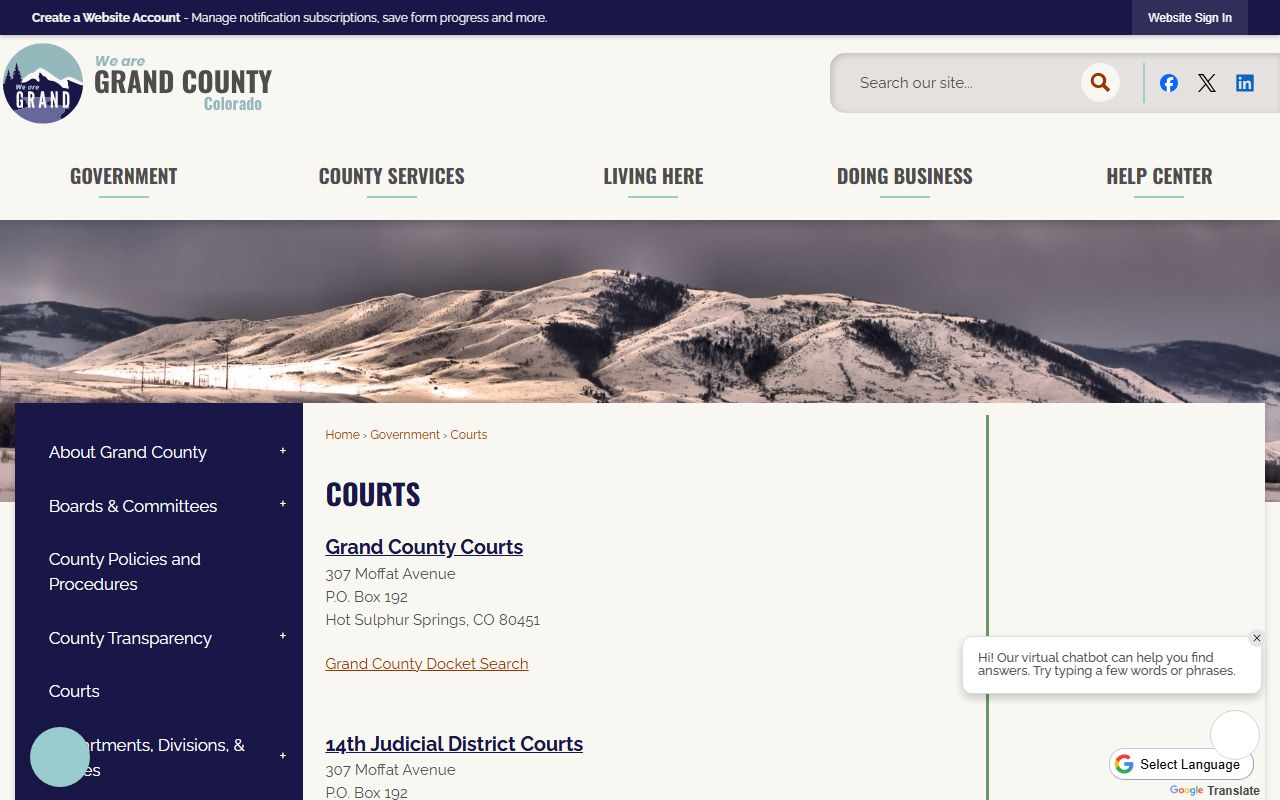
That local page helps separate jail custody questions from filed court-record questions after an arrest.
The statewide Colorado docket search is the public search form used to look for Grand County hearing listings and case-number details.
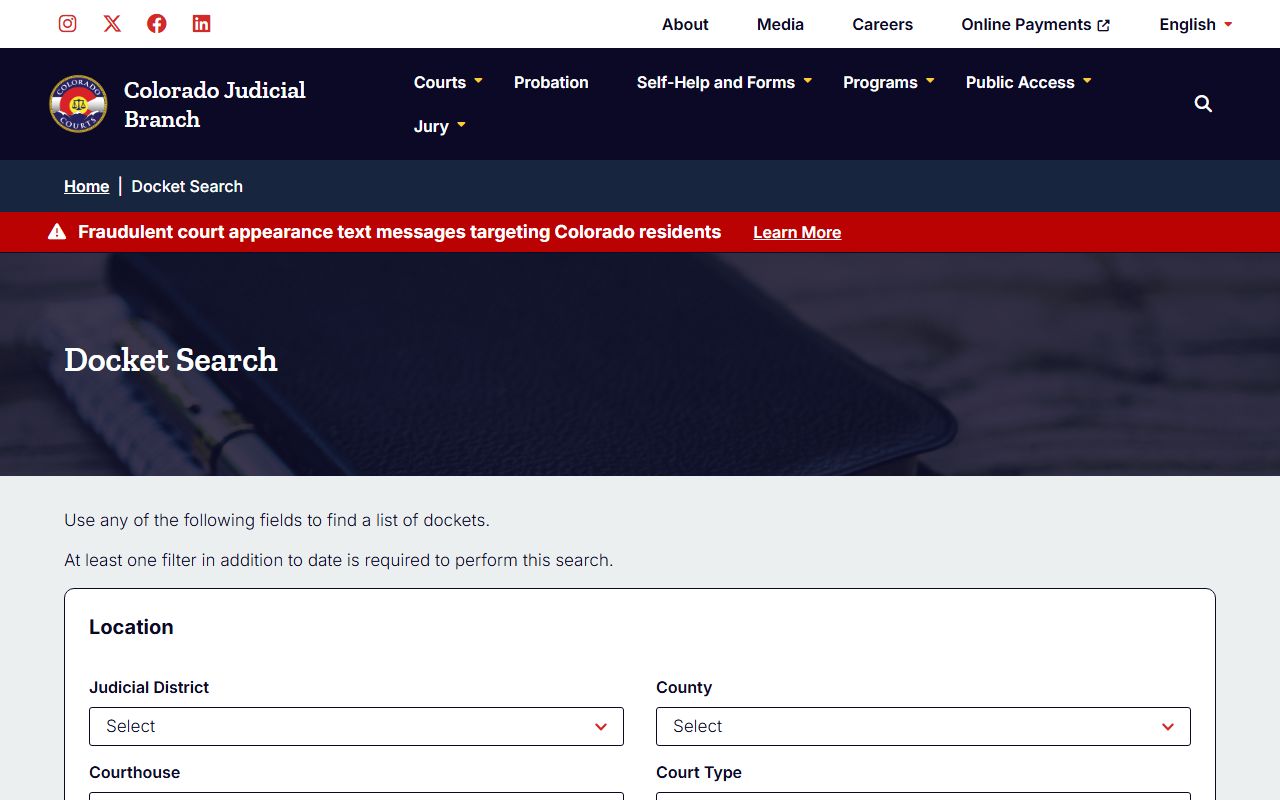
The docket form is useful for case discovery, but full documents still require the Judicial Branch record request process.
Public Record Search
Sponsored Results